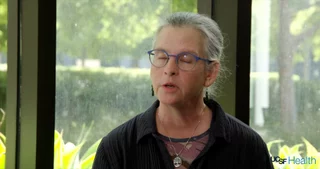
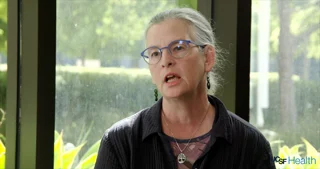
Susanna Benningfield – Treatment, Self-care
Question
Getting StartedWhat should I expect during cancer treatment?
Answer
What helped me most was knowing what to expect. My doctor explained that radiation is cumulative—that the first couple of weeks might feel manageable, but it would get harder as treatment went on and even after it ended. That honesty made a huge difference. I understood that the pain I felt was part of the process, not something going wrong, and that gave me a sense of relief.
“Once I understood what to expect, it took away a lot of the fear. The hardest part wasn’t the pain—it was the uncertainty.”
In Their Own Words
My treatment with oral frontal cancer required seven weeks of radiation, five days a week, with every Tuesday having a chemo boost. And I would tell anybody else to listen to their doctor and ask for an honest assessment of what to expect. And my experience-- so my primary physician was Su-Yam, the radiation oncologist, she's wonderful. And I said, what makes me anxious is not knowing what to expect.
So I said, please tell me with as much details possible. And she did. She said radiation is cumulative and delayed. The first two weeks, it's not going to feel like anything's happening. But by the third week, most people start to feel pretty rotten. And after you finish the treatment for the two weeks following that, you will continue to feel even worse, because the treatment is delayed.
So I knew I was going to have physical pain. I had it described to me what to expect. I was given assurance that I could go to symptom management service, which was also a very wonderful resource here. So I knew my pain was going to be managed. And I understood that the pain I was feeling didn't mean that something was going wrong.
In my case, my cancer symptom was completely un-painful. I had a wound on my neck that didn't hurt at all. I didn't have any sore throat. I didn't have any problems. So it was the treatment that made me feel rotten. But physical pain I felt was manageable. The anxiety of feeling like something's wrong and you're not doing anything about it was the biggest suffering I had.
So as soon as I got my treatment plan, and I understood what the treatment plan was, when it would start, when it would end, and what to expect, that for me felt like the biggest relief. But I would say to anybody with this kind of head neck cancer who was getting this seven weeks of radiation to go in and say, open eye and say, yeah, this is going to be a rough go.
They're trying treatment.